
KNY Group delivers expert fabrication, civil, electrical, and manpower solutions with quality, safety, and timely execution.
Core cutting, blasting, and painting are some of the most essential activities in the construction and industrial sectors. These services are typically required in civil works, electrical conduit installations, structural modifications, and surface preparation for protective coatings. Each task must be done with accuracy, safety, and proper planning.
Core cutting is the process of drilling circular holes in concrete walls, slabs, and beams for plumbing pipes, electrical wiring, HVAC ducts, and other services. Specialized diamond-tipped drill machines are used, which cut smoothly without damaging the surrounding structure. Continuous water supply is provided during drilling to reduce heat and control dust.
Hole sizes can range from 2 inches to 14 inches or more. Before cutting, the site is surveyed, the drilling spot is marked, slab thickness is checked, and the drill stand is secured. For safety, workers wear helmets, goggles, gloves, and safety shoes. In load-bearing structures, engineers supervise to ensure structural strength is not compromised.
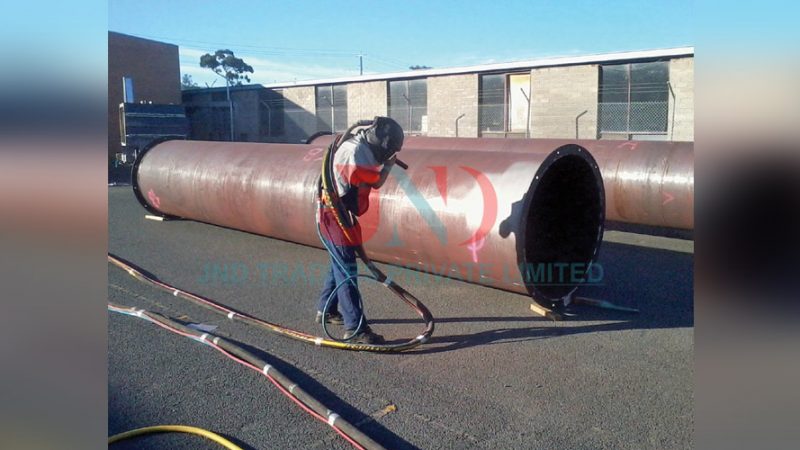
Blasting is done for surface preparation. In this process, abrasive materials like sand, grit, or steel shots are propelled at high speed to clean surfaces and remove rust, paint, oil, or other deposits. This step is essential before applying paint or protective coatings, as it ensures strong adhesion and long-lasting durability.
Sandblasting – for general cleaning
Grit blasting – for heavy rust removal
Shot blasting – for industrial-grade cleaning
During blasting, operators wear full protective suits, gloves, and helmets with air filters. The blasting area is isolated or covered with protective curtains to prevent dust and flying particles.
After blasting, painting is carried out on the cleaned surface. First, a primer is applied to seal the surface and provide a base layer. Industrial coatings like epoxy, polyurethane, or zinc-rich primers are then used depending on environmental conditions. Intermediate and top coats are applied using spray, brush, or roller.
Coating thickness is checked with DFT (Dry Film Thickness) gauges, and proper curing time is maintained to avoid premature damage. Surfaces are inspected after painting, and touch-ups are done where needed.
Once the work is complete, all equipment is removed, and the site is cleaned. Waste material and used blasting media are collected and disposed of safely. The finished structures are handed over after final inspection. A detailed record, including before-and-after photos and reports, is also maintained for client reference.
Core cutting, blasting, and painting are critical steps in modern construction and industrial maintenance. They ensure precision, durability, and safety. With trained teams, high-quality machines, and strict safety measures, even complex projects can be completed efficiently and reliably.
Address – L15 JTM Mall Jagatpura Jaipur 302017
Email – Knybizzassociates@gmail.com info@knygroup.co.in
Contact no. – 9571442813, 9929562799